This 17th-century Welsh stone house is a masterclass in interior design and renovation
In the heart of Brecon Beacons National Park, Tŷ Llwyd is a 17th-century Welsh stone house reinvented with its rustic-chic decor
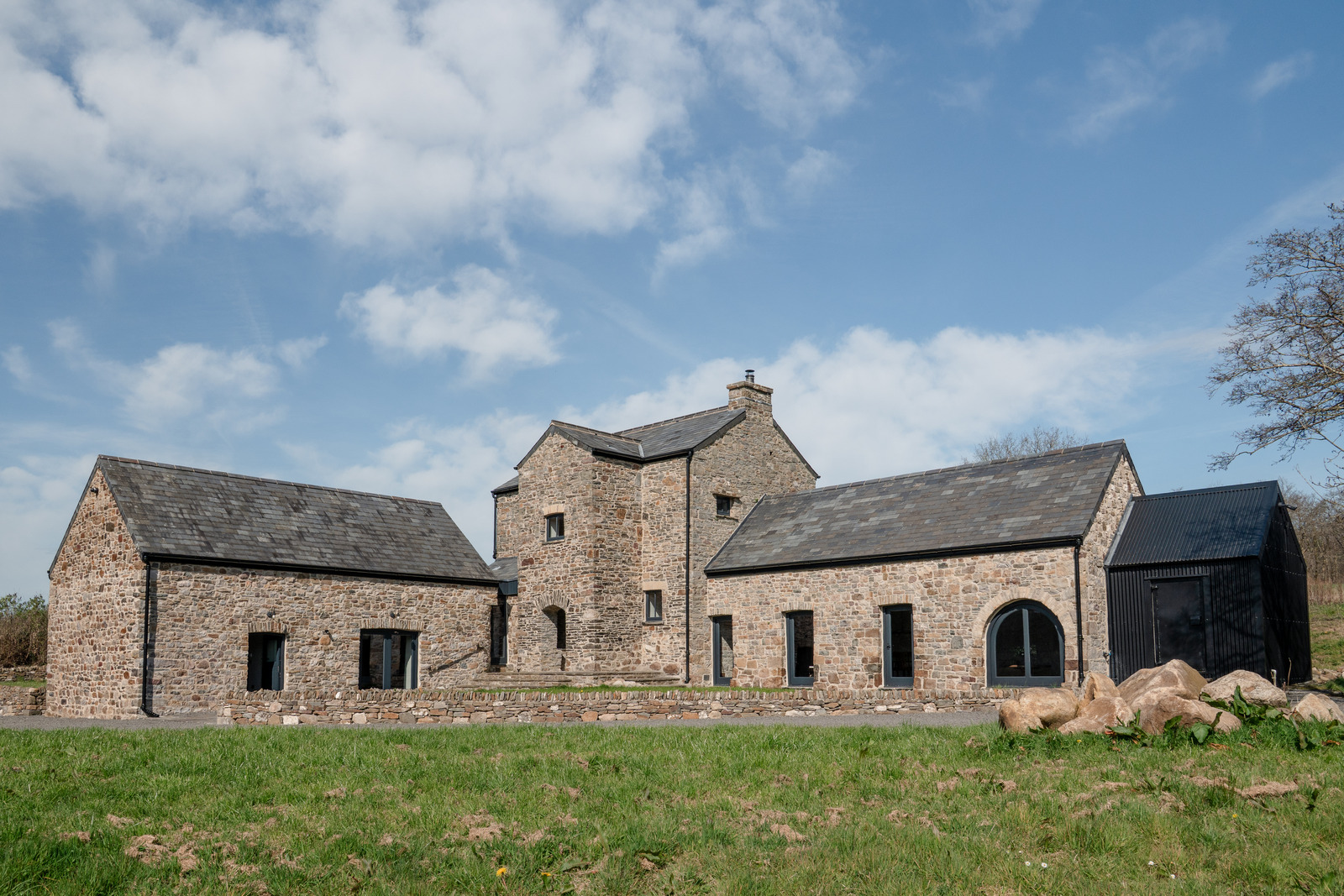
Located southwest of the Bannau Brycheiniog National Park, the Brecon Beacons, this listed farmhouse bears witness to four centuries of Welsh history. Tŷ Llwyd, “the gray house,” lives up to its name. The rough-hewn stone walls, with their ochre and slate hues of this 17th-century Welsh stone house dominate a landscape of meadows and woods. An architect has completely reimagined the complex, uniting three separate buildings into a home that blends vernacular heritage with contemporary sensibility.
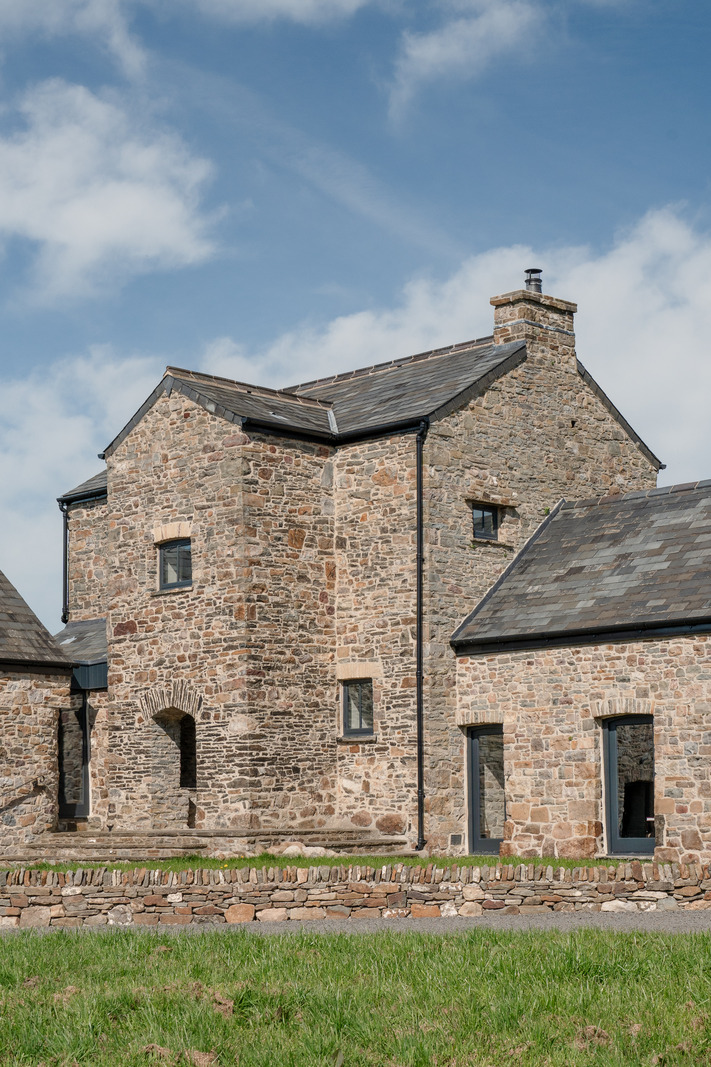
The main façade dates from the early 1600s. Cadw, the Welsh heritage protection agency, describes it as bearing “the influence of Renaissance ideas.” Up close, the masonry reveals a mosaic of multicolored rubble stone, sandstone, schist, and limestone, assembled without uniformity, using the technique typical of rural constructions in the region. The roof of local slate, the solid oak window frames, and the vaulted porch complete this façade, which seems to have always been part of the landscape.
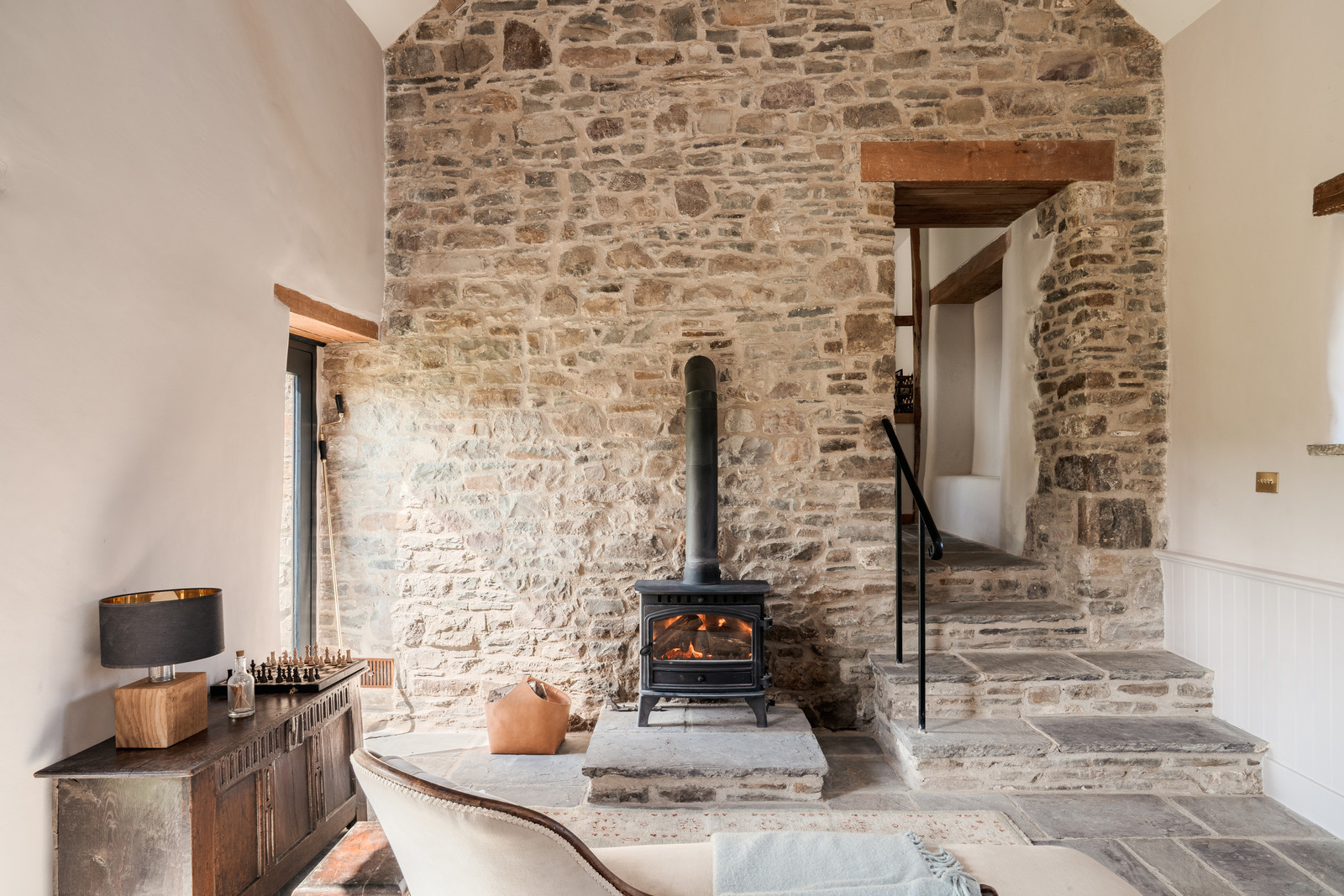
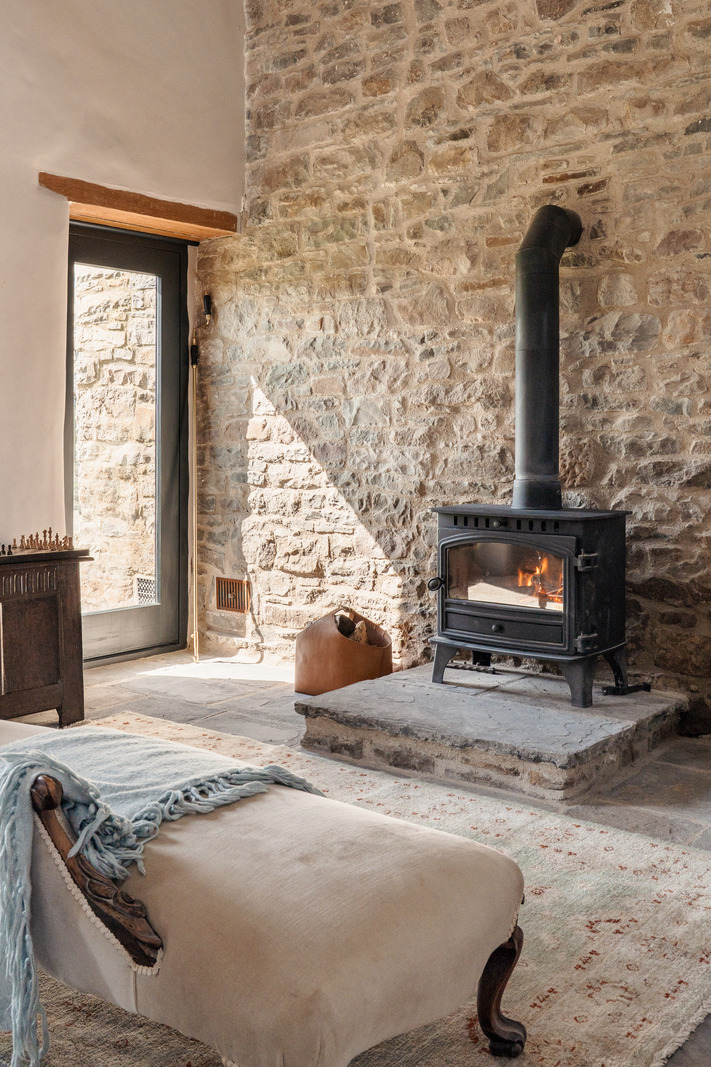
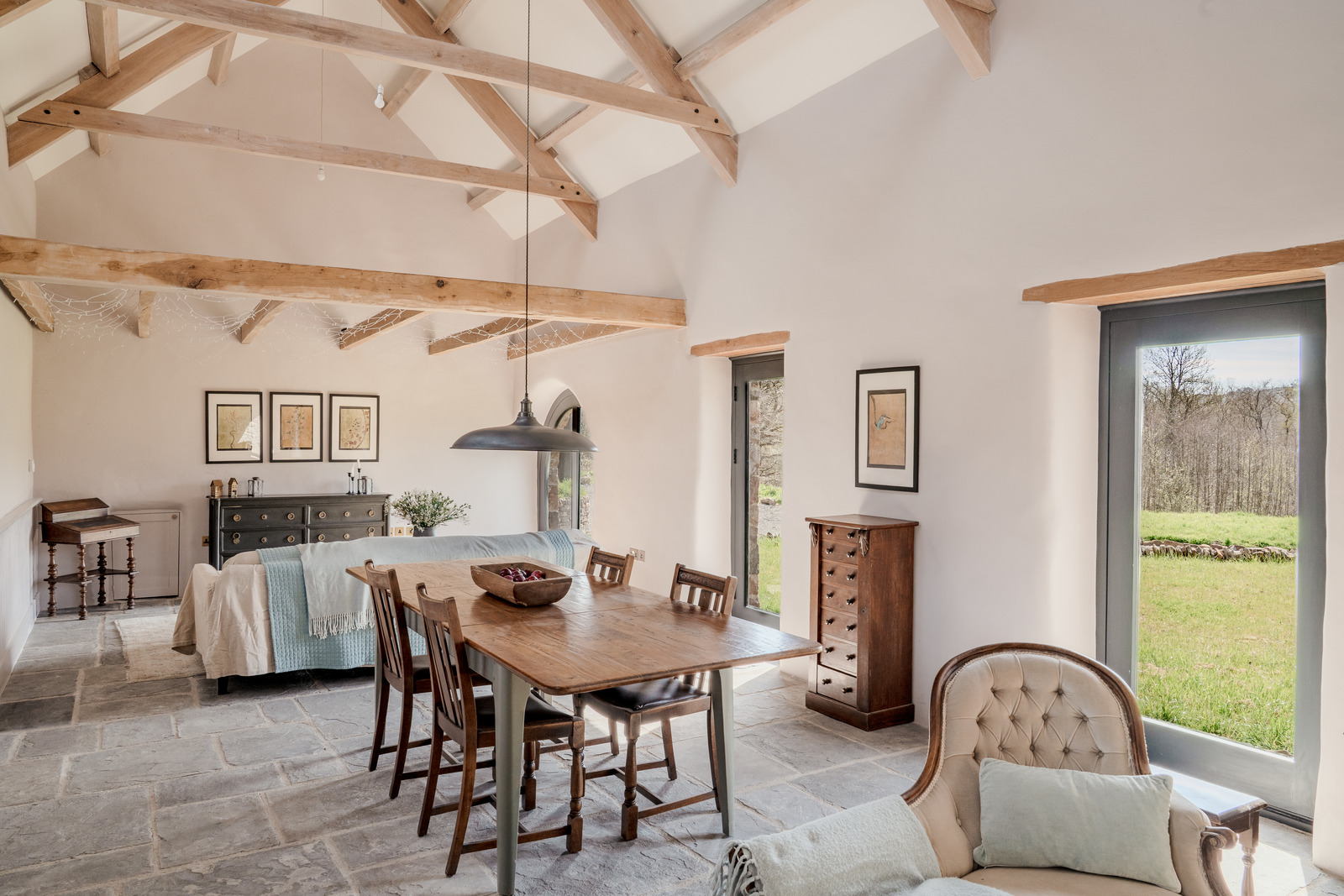
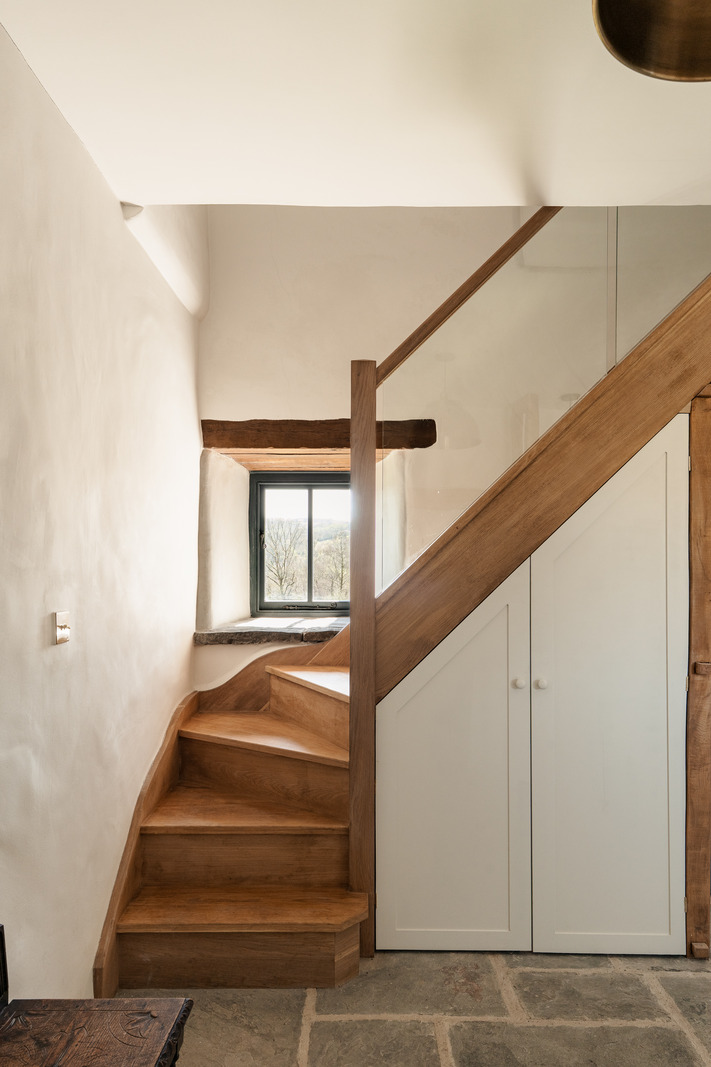
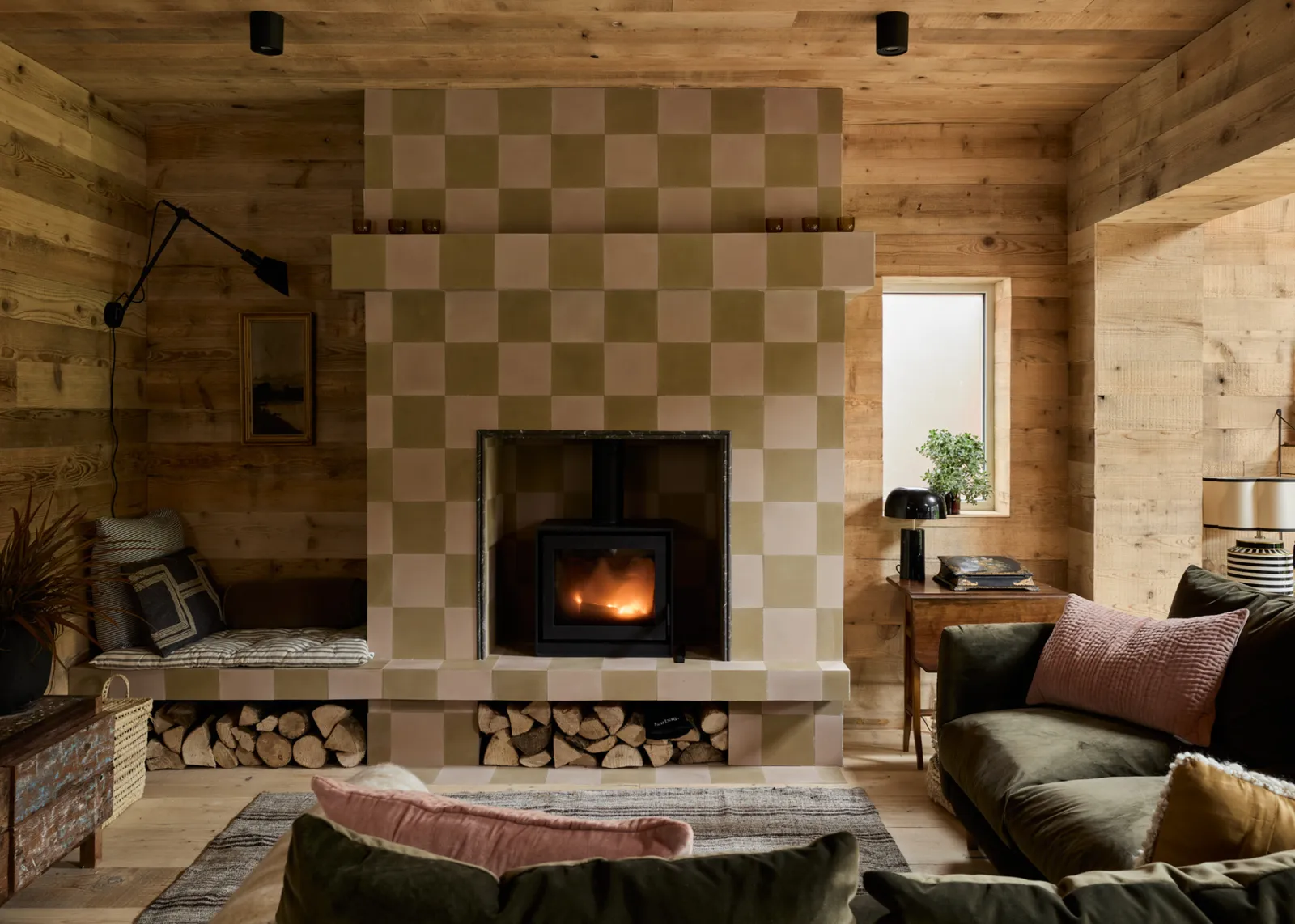
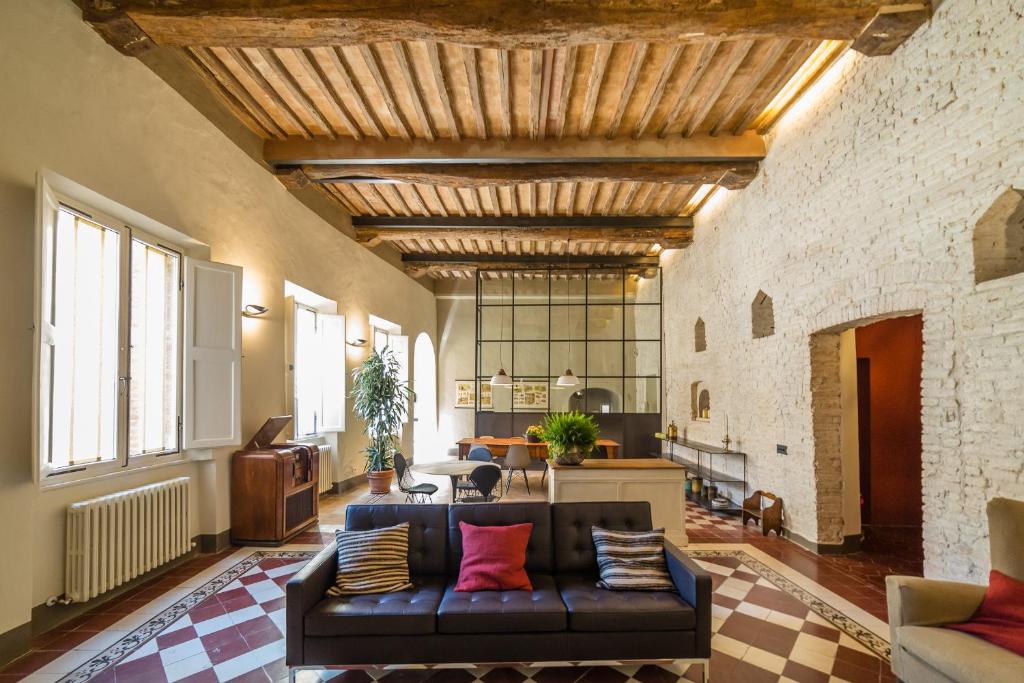
Its large living area surprises with its soaring height. Exposed oak roof trusses, skylights, and whitewashed walls create a bright, rustic interior that feels both historic and contemporary. A cast-iron wood-burning stove, set on a stone base, warms the living area.
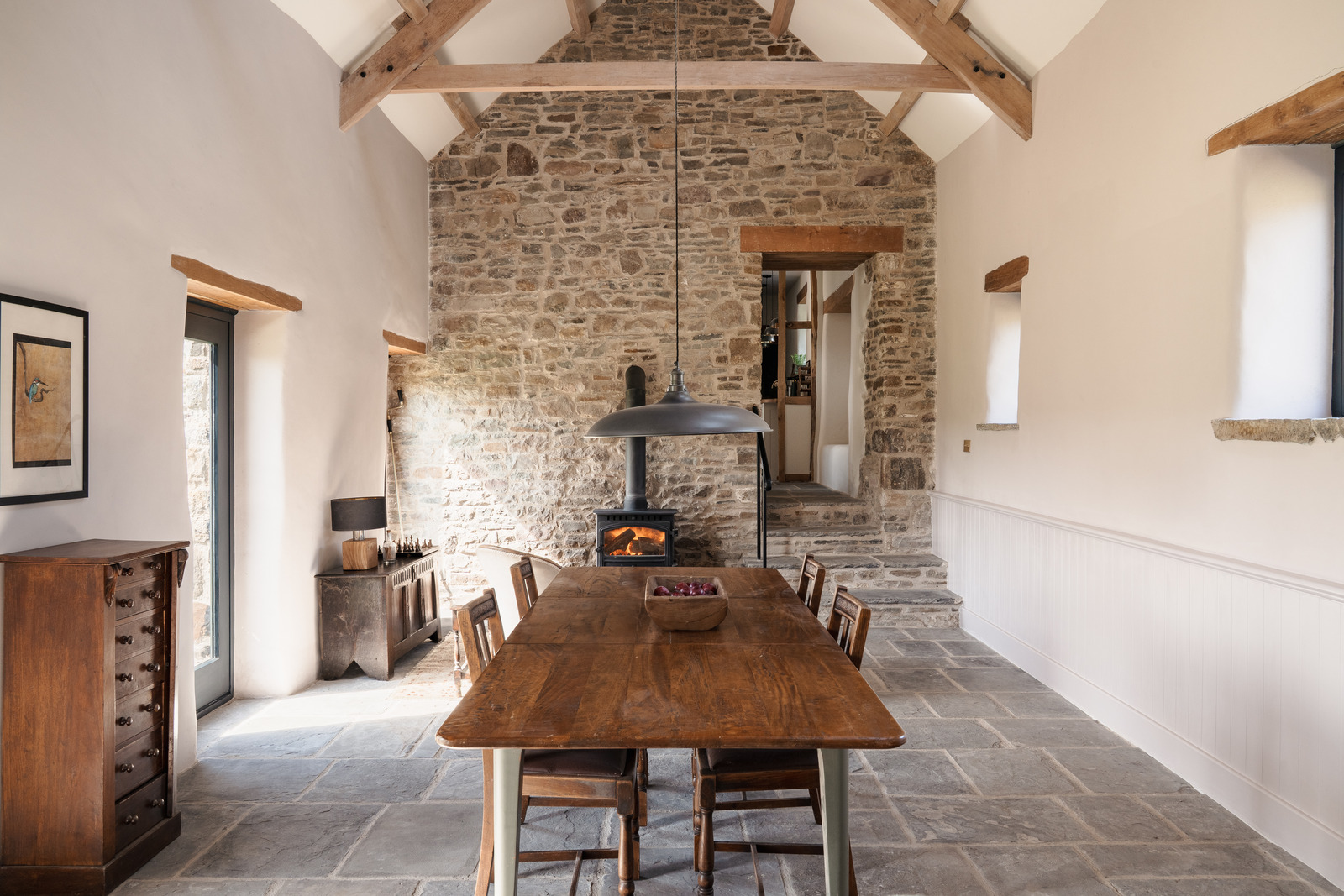
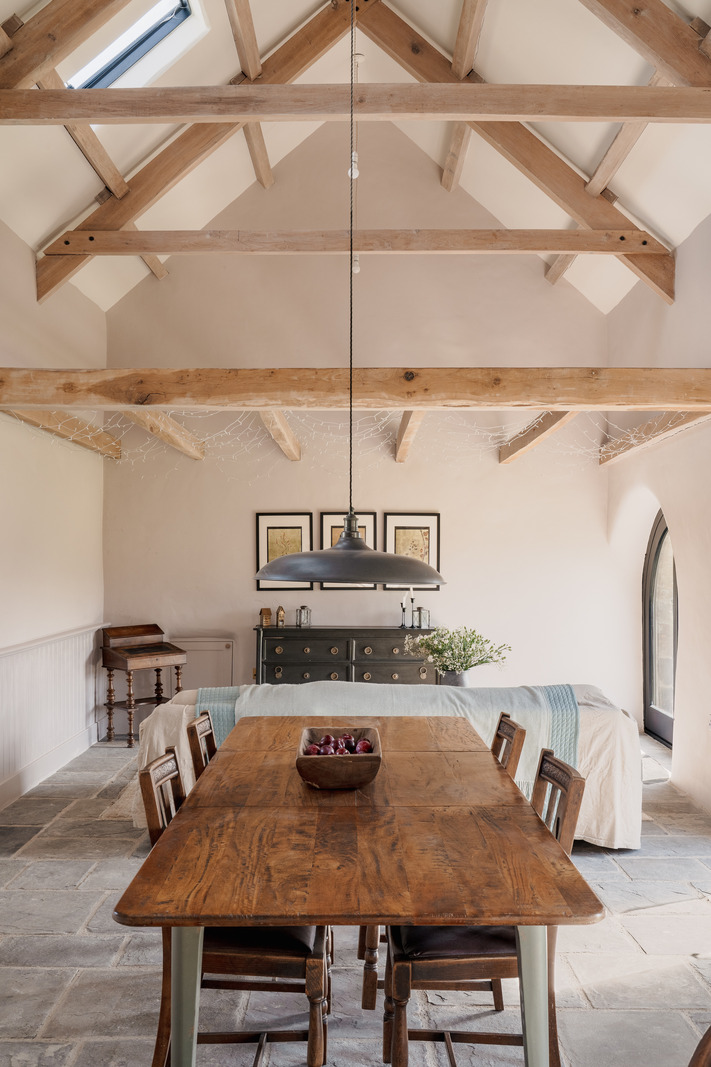
The antique oak farmhouse table and mismatched chairs create a relaxed dining area. Its gray schist slate flooring is consistent throughout the room, a choice that unifies the space. At the far end of this large room, a wide arched window was crafted by a local carpenter. It occupies the site of a former cart entrance.
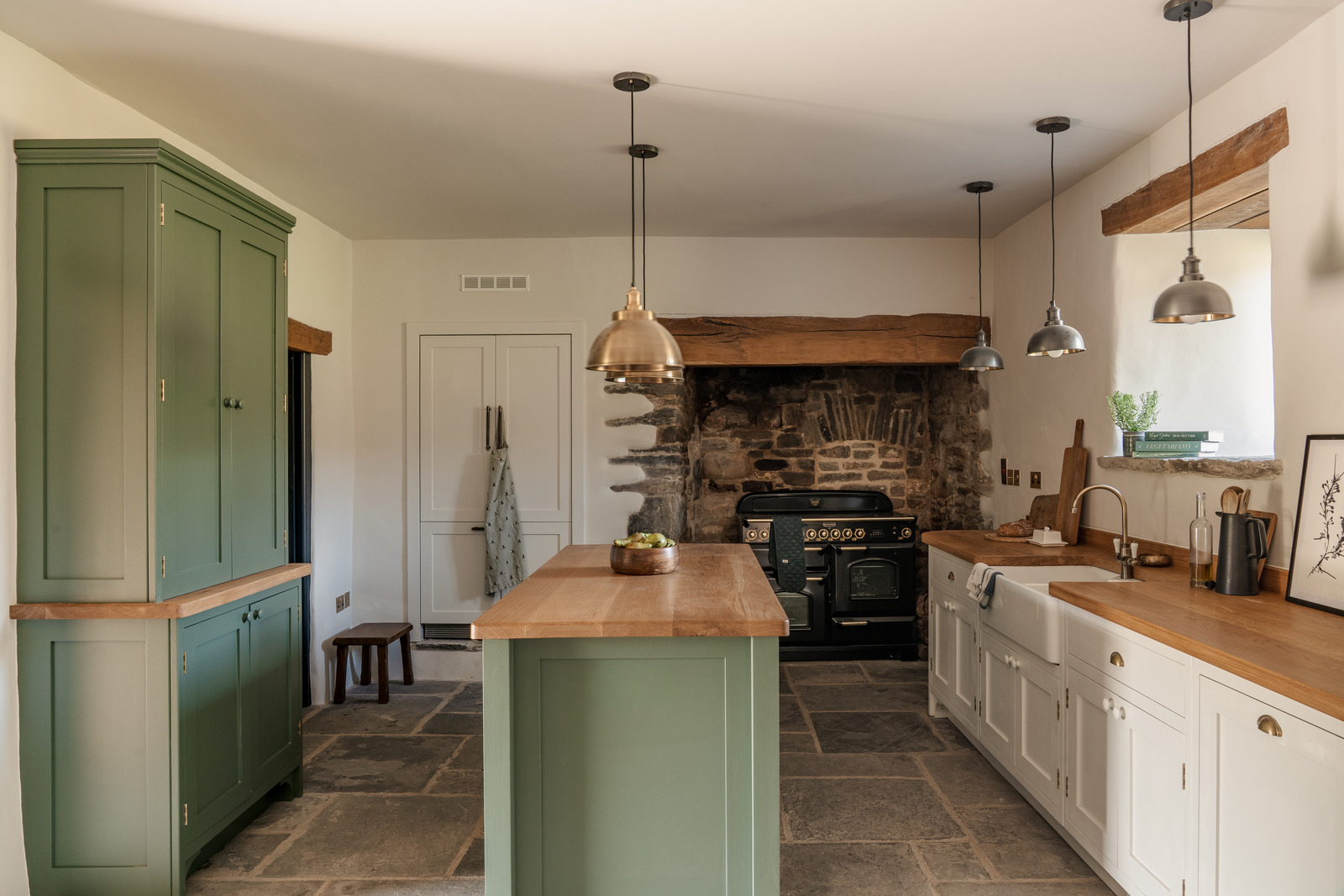
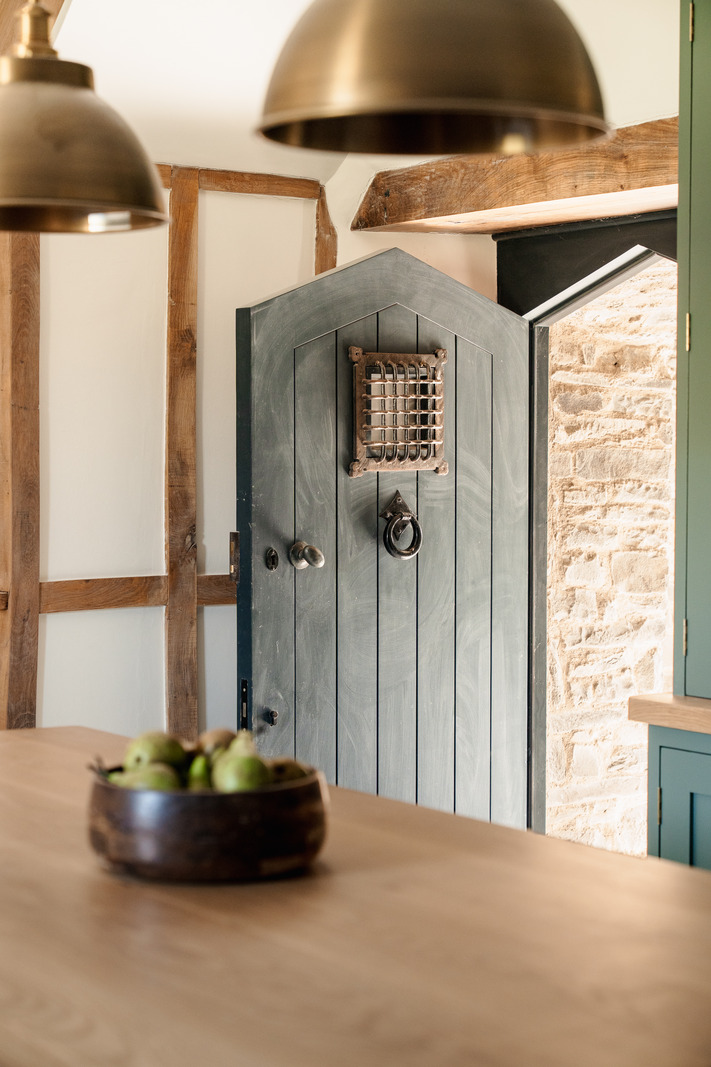
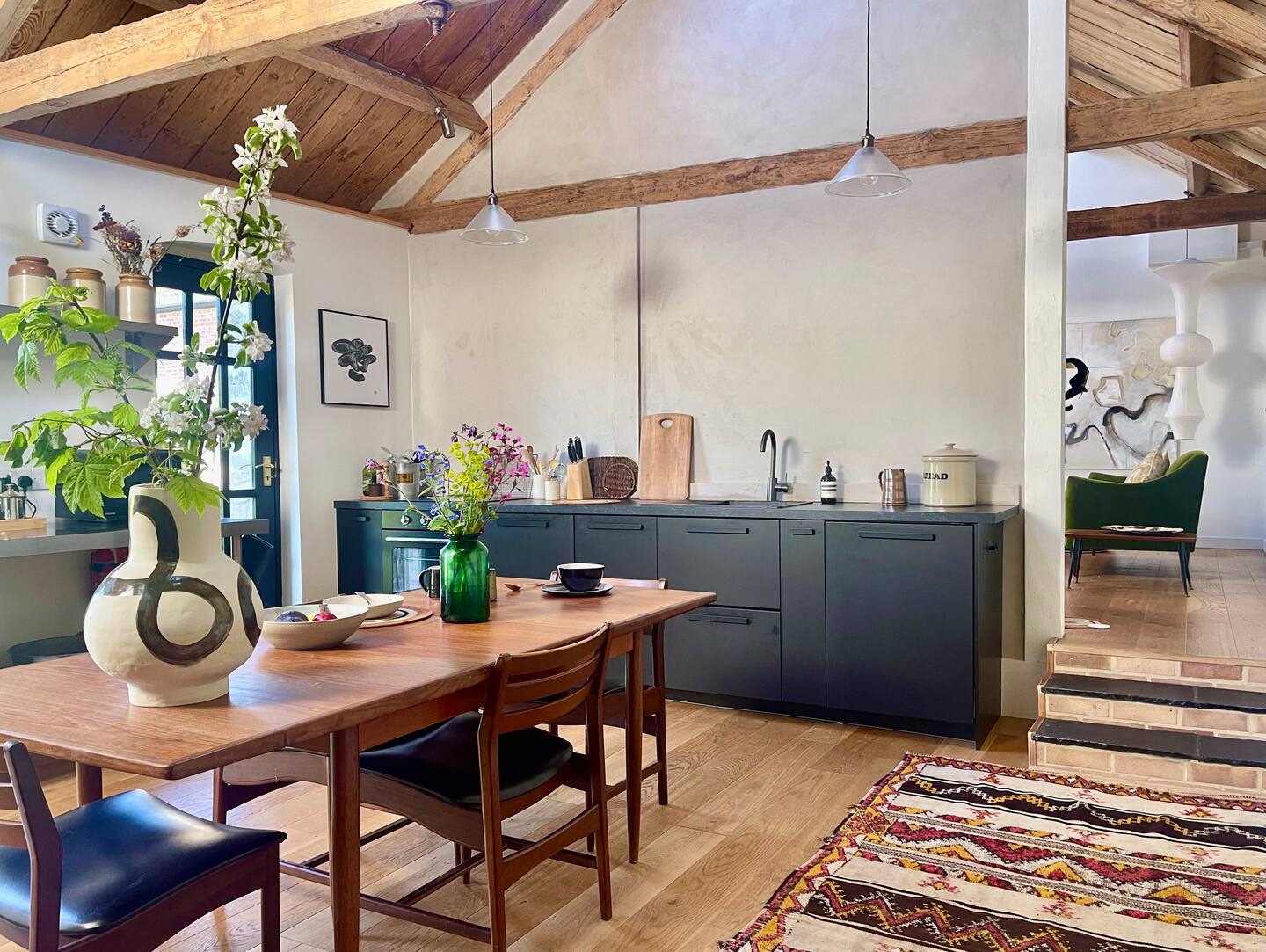
The heart of this Welsh stone house is its kitchen. Its custom-made cabinets feature a two-tone palette of sage green and off-white, with thick solid wood countertops. The choice of green is bold and perfectly complements the exposed stone walls and oak beams. A black Rangemaster range oven takes center stage in the large original open fireplace.
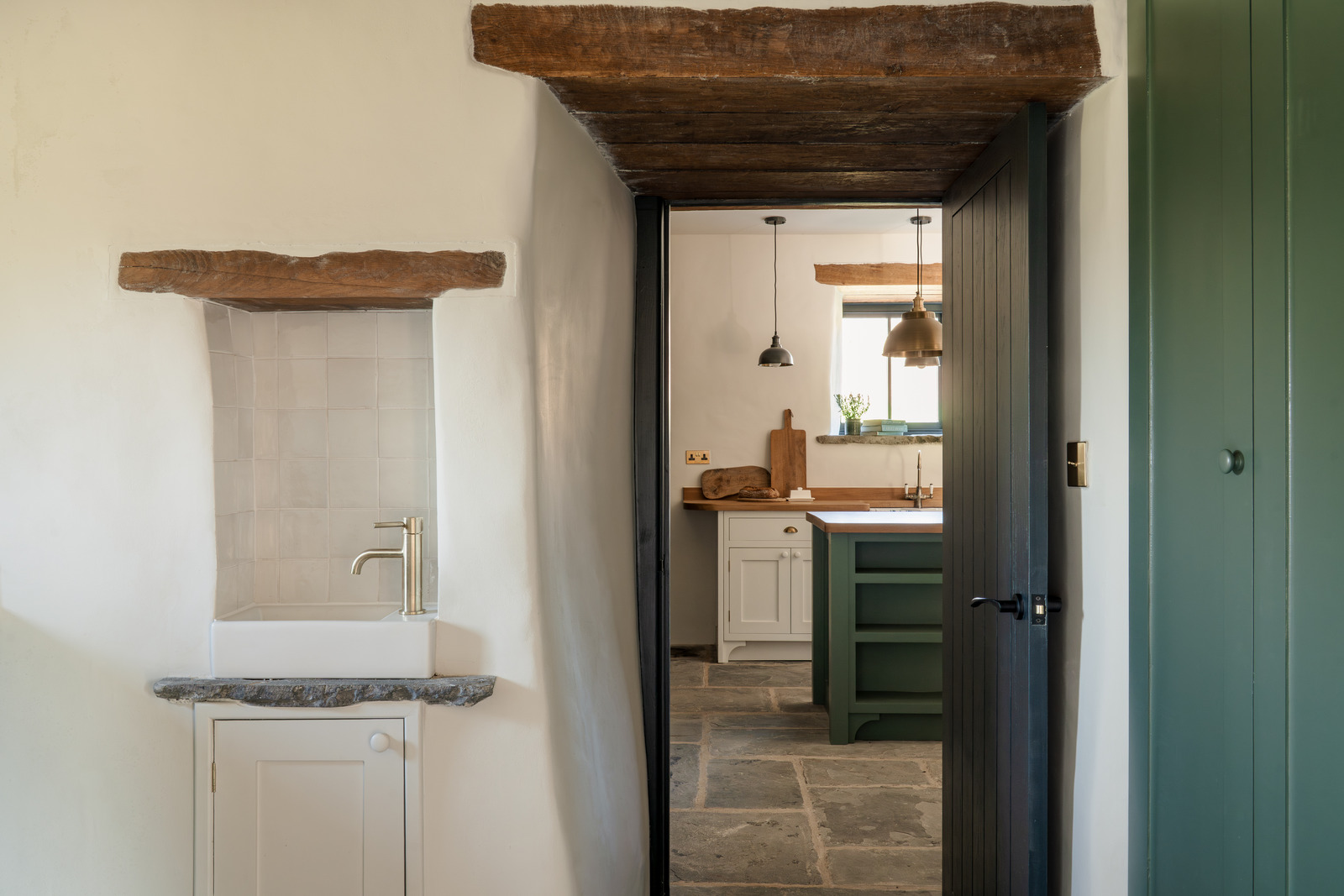
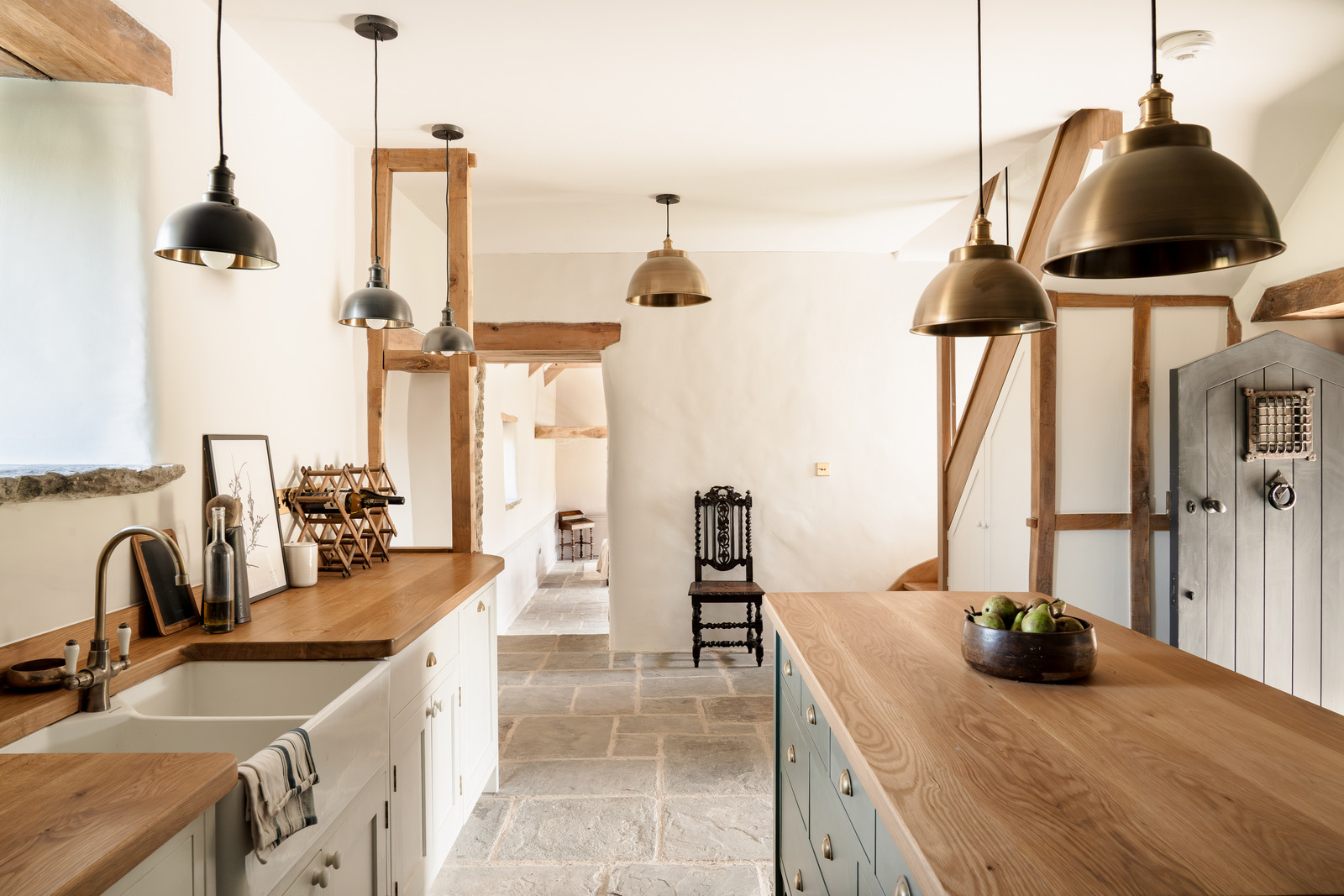
The double sink, a classic Belfast deep basin, faces a window overlooking the meadow. It complements the kitchen’s traditional feel while remaining modern. The floor is covered with weathered tiles.
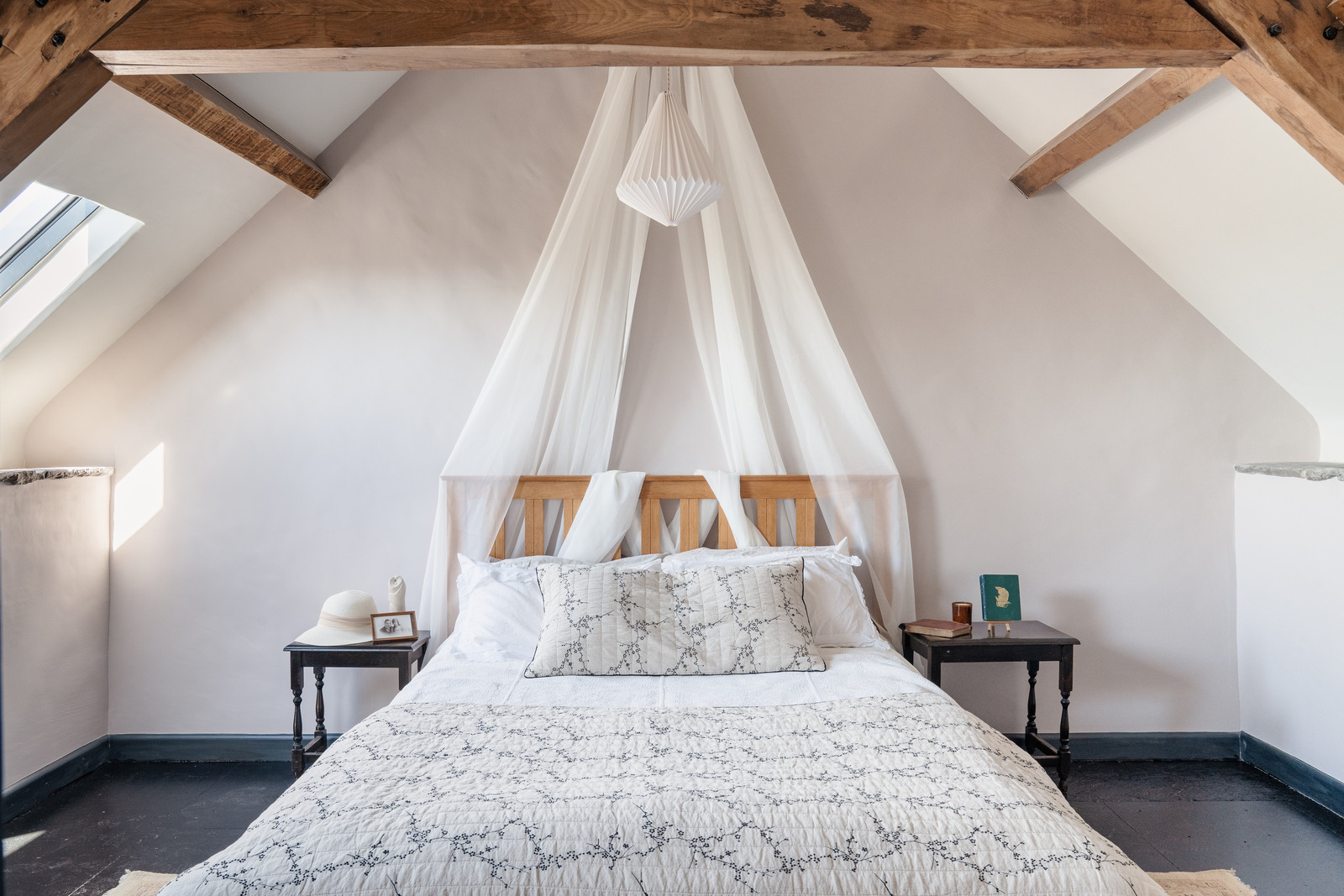
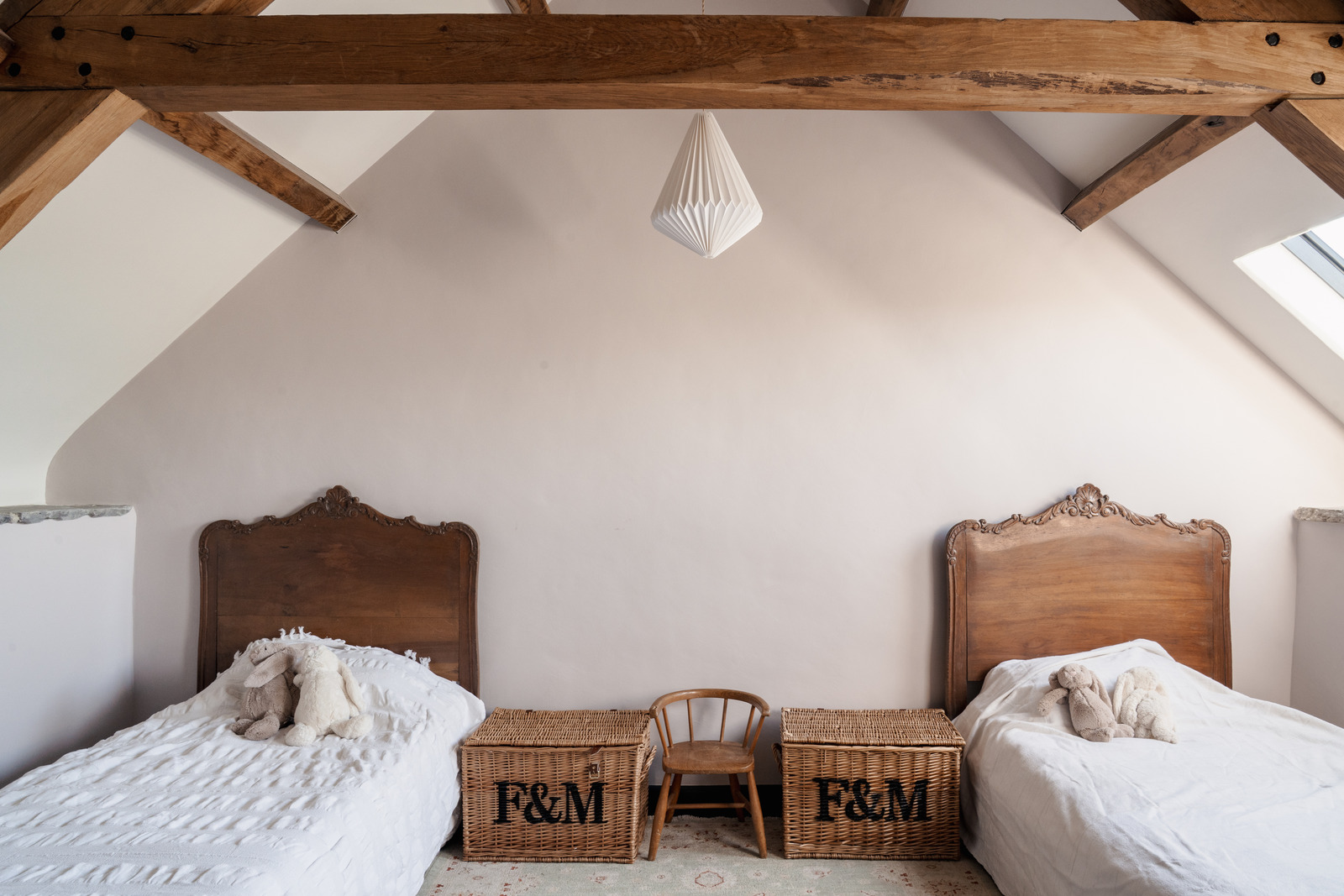
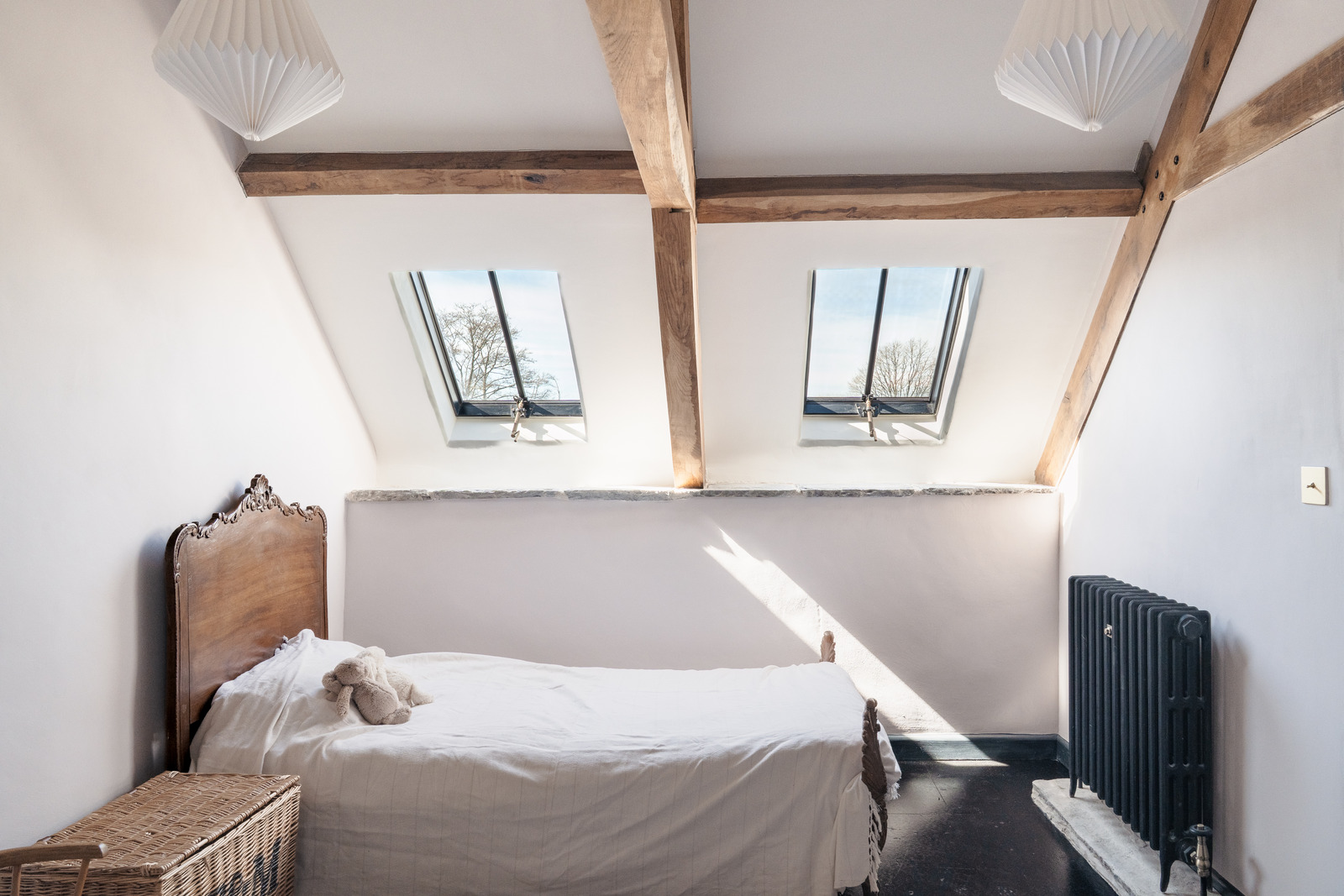
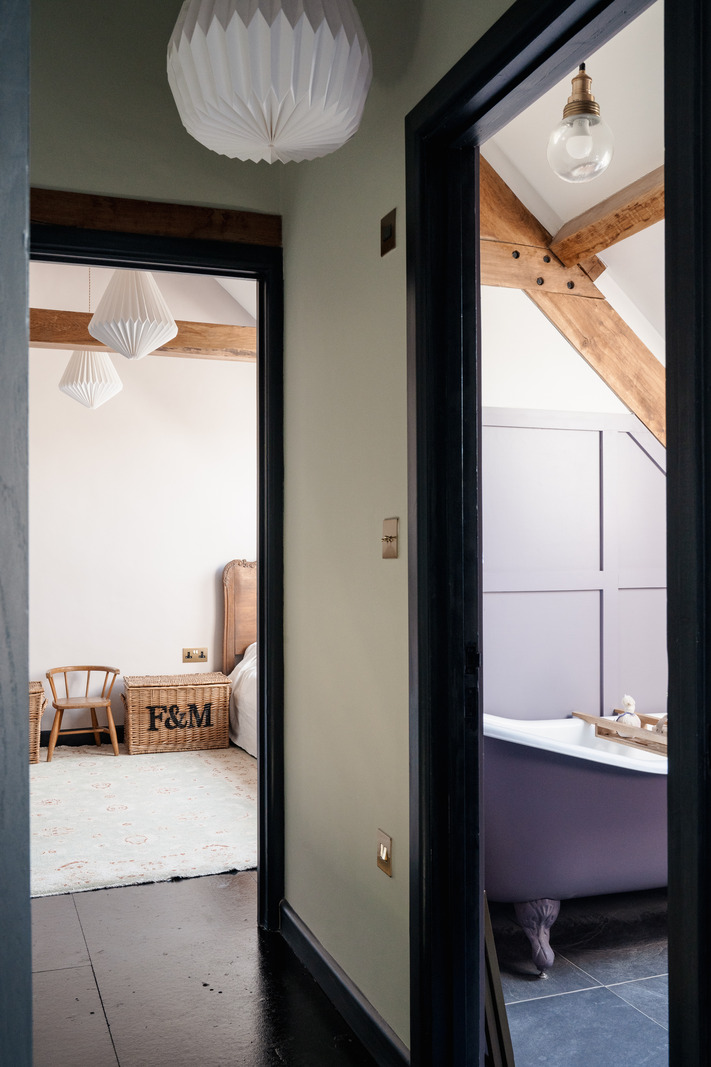
Upstairs, the bedrooms are located in the attic. Their sloping ceilings, rough-hewn exposed beams, and skylights create a cozy, shelter-like atmosphere. The master bedroom features a white color scheme, with a canopy-style drape suspended beneath a V-shaped beam structure. Two twin beds with carved Louis XVI headboards add an unexpected French touch to a second attic bedroom. Yet it is a surprising mix that works perfectly in this rural, English-speaking setting.
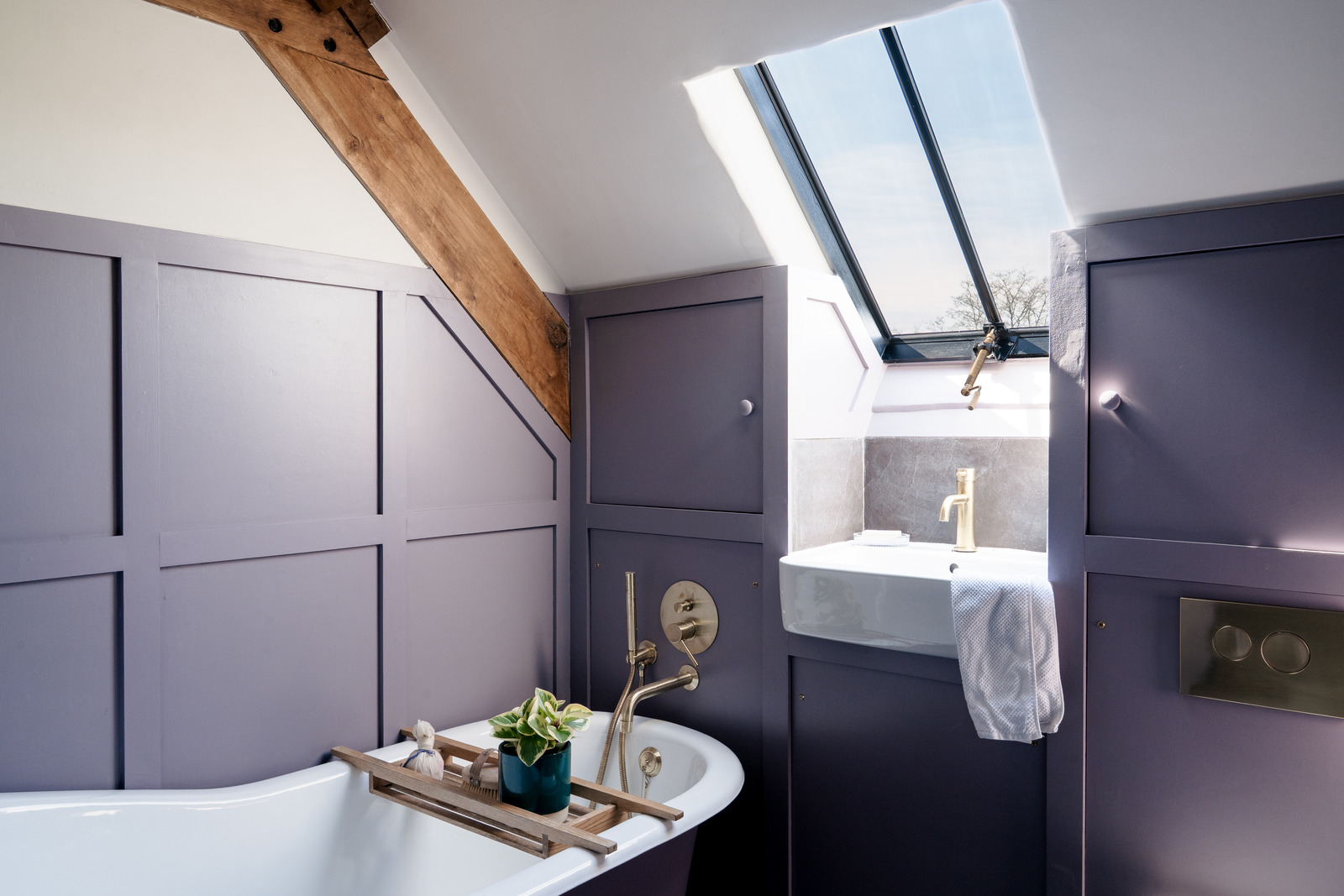
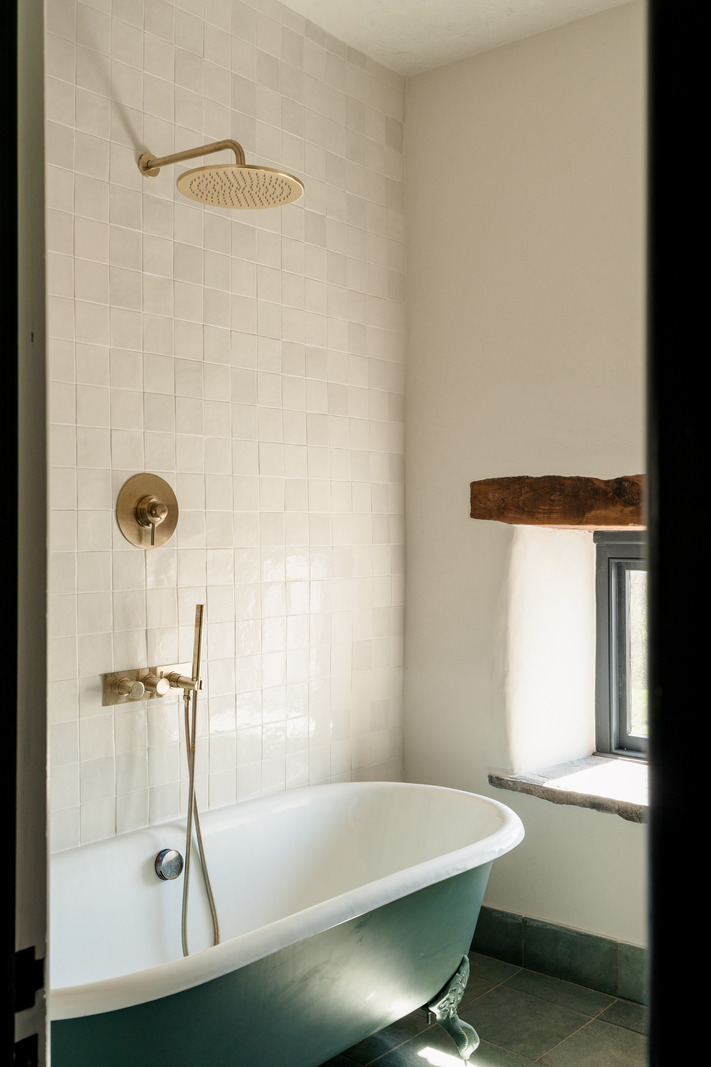
This is undoubtedly the most striking room in the house. One of the bathrooms is adorned with wood paneling painted in plum purple. It covers all the walls up to the sloped ceiling. A white claw-foot bathtub, brushed brass fixtures, and a skylight reminiscent of a studio window add an extra touch of charm. The second bathroom opts for a softer palette: an English green claw-foot bathtub, small-format white zellige tiles, and gold-toned fixtures. Two distinct atmospheres, two different design choices, resulting in two utterly successful rooms that harmonize with the house’s English country style.
The house is located on the outskirts of Glanamman, a mining village in the Amman Valley. The nearby national park offers trails, waterfalls, moors, and peaks such as Pen y Fan. This region is also recognized as a Dark Sky Reserve, allowing for optimal viewing of the Milky Way. The Gower Peninsula, a National Natural Heritage Site, is just a forty-five-minute drive away. It is a serene area, far from crowded tourist routes, whose beauty is appreciated by those who love the unspoiled tranquility of the countryside.
Tŷ Llwyd succeeds where many fail in renovating old buildings: it doesn’t try to make everything match. The choices are sometimes almost daring, the green in the kitchen, the purple in the bathroom, the baroque headboards, but they work very well nonetheless. Materials reign supreme: stone, oak, slate, and lime. The antique furniture blends with these materials in a beautiful balance.

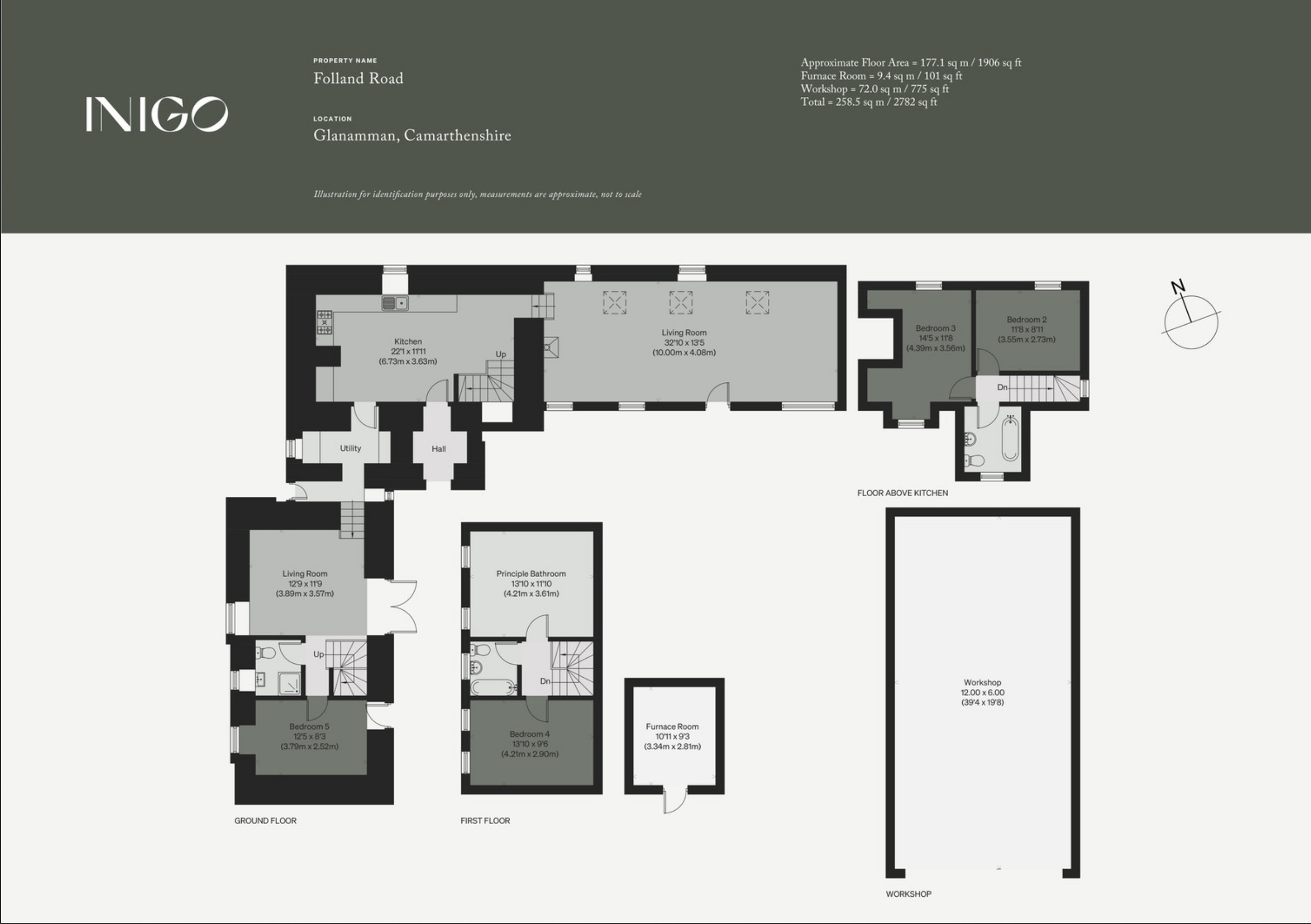
This listed and renovated 17th-century Welsh stone house is for sale at INIGO
Living stone architecture
The main façade dates from the early 1600s. Cadw, the Welsh heritage protection agency, describes it as bearing “the influence of Renaissance ideas.” Up close, the masonry reveals a mosaic of multicolored rubble stone, sandstone, schist, and limestone, assembled without uniformity, using the technique typical of rural constructions in the region. The roof of local slate, the solid oak window frames, and the vaulted porch complete this façade, which seems to have always been part of the landscape.
The cathedral-ceilinged living room
Its large living area surprises with its soaring height. Exposed oak roof trusses, skylights, and whitewashed walls create a bright, rustic interior that feels both historic and contemporary. A cast-iron wood-burning stove, set on a stone base, warms the living area.
The antique oak farmhouse table and mismatched chairs create a relaxed dining area. Its gray schist slate flooring is consistent throughout the room, a choice that unifies the space. At the far end of this large room, a wide arched window was crafted by a local carpenter. It occupies the site of a former cart entrance.
The kitchen: English green takes center dtage
The heart of this Welsh stone house is its kitchen. Its custom-made cabinets feature a two-tone palette of sage green and off-white, with thick solid wood countertops. The choice of green is bold and perfectly complements the exposed stone walls and oak beams. A black Rangemaster range oven takes center stage in the large original open fireplace.
The double sink, a classic Belfast deep basin, faces a window overlooking the meadow. It complements the kitchen’s traditional feel while remaining modern. The floor is covered with weathered tiles.
In the bedrooms, white and beams
Upstairs, the bedrooms are located in the attic. Their sloping ceilings, rough-hewn exposed beams, and skylights create a cozy, shelter-like atmosphere. The master bedroom features a white color scheme, with a canopy-style drape suspended beneath a V-shaped beam structure. Two twin beds with carved Louis XVI headboards add an unexpected French touch to a second attic bedroom. Yet it is a surprising mix that works perfectly in this rural, English-speaking setting.
A colorful bathroom
This is undoubtedly the most striking room in the house. One of the bathrooms is adorned with wood paneling painted in plum purple. It covers all the walls up to the sloped ceiling. A white claw-foot bathtub, brushed brass fixtures, and a skylight reminiscent of a studio window add an extra touch of charm. The second bathroom opts for a softer palette: an English green claw-foot bathtub, small-format white zellige tiles, and gold-toned fixtures. Two distinct atmospheres, two different design choices, resulting in two utterly successful rooms that harmonize with the house’s English country style.
A world of its own
The house is located on the outskirts of Glanamman, a mining village in the Amman Valley. The nearby national park offers trails, waterfalls, moors, and peaks such as Pen y Fan. This region is also recognized as a Dark Sky Reserve, allowing for optimal viewing of the Milky Way. The Gower Peninsula, a National Natural Heritage Site, is just a forty-five-minute drive away. It is a serene area, far from crowded tourist routes, whose beauty is appreciated by those who love the unspoiled tranquility of the countryside.
Our design take
Tŷ Llwyd succeeds where many fail in renovating old buildings: it doesn’t try to make everything match. The choices are sometimes almost daring, the green in the kitchen, the purple in the bathroom, the baroque headboards, but they work very well nonetheless. Materials reign supreme: stone, oak, slate, and lime. The antique furniture blends with these materials in a beautiful balance.


This listed and renovated 17th-century Welsh stone house is for sale at INIGO


Commentaires